For the love of feminism, let’s stop dick-shaming

This piece isn’t about shaming dick-shamers, I promise. Be aware we will touch on misogyny and violence, and there’s some pretty strong language in places.
I won’t lie to you: sometimes I laugh at teeny-dick jokes.
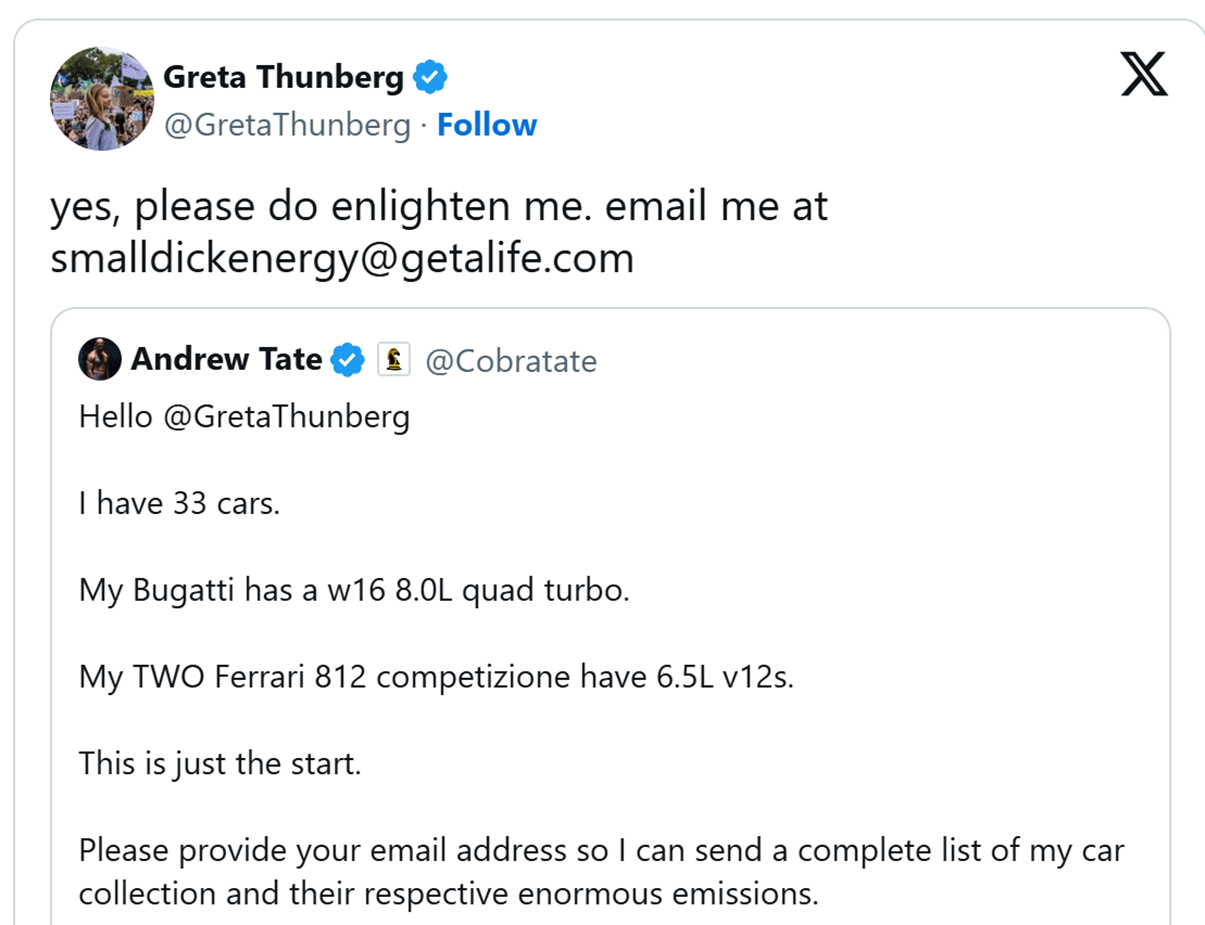
It’s a guilty pleasure, not so much because of the jokes themselves, but who they’re usually aimed at. There’s a kind of man whose massive ego is mismatched with a skin so thin the tiniest scrape shows the misogyny beneath. You know what I’m talking about. Even I cheered when Greta told Andrew Tate to email her at smalldickenergy@getalife.com. (I may not have agreed with her, but I know a well-executed diss when I see one.)
But the appeal of the teeny-dick joke runs deeper than that. Women have been shamed for our appearances, never quite good enough no matter what we do; and for our sexuality, either not enough or too much. A teeny-dick joke gives shitty men a glimpse of this intimate kind of shaming, levelling the playing field just a little. It can seem like a weapon of sorts against these shitty men – and we need weaponry, because right now it feels like there’s a war on women, and I’m not sure we’re winning.
But the teeny-dick joke isn’t my weapon of choice. I think it risks collateral damage not just to decent boys and men, but other genders too – because what seems, and often is, kind of funny also buys into ideas that are better left behind.
Before we get into those ideas, I want to say what this piece is not.
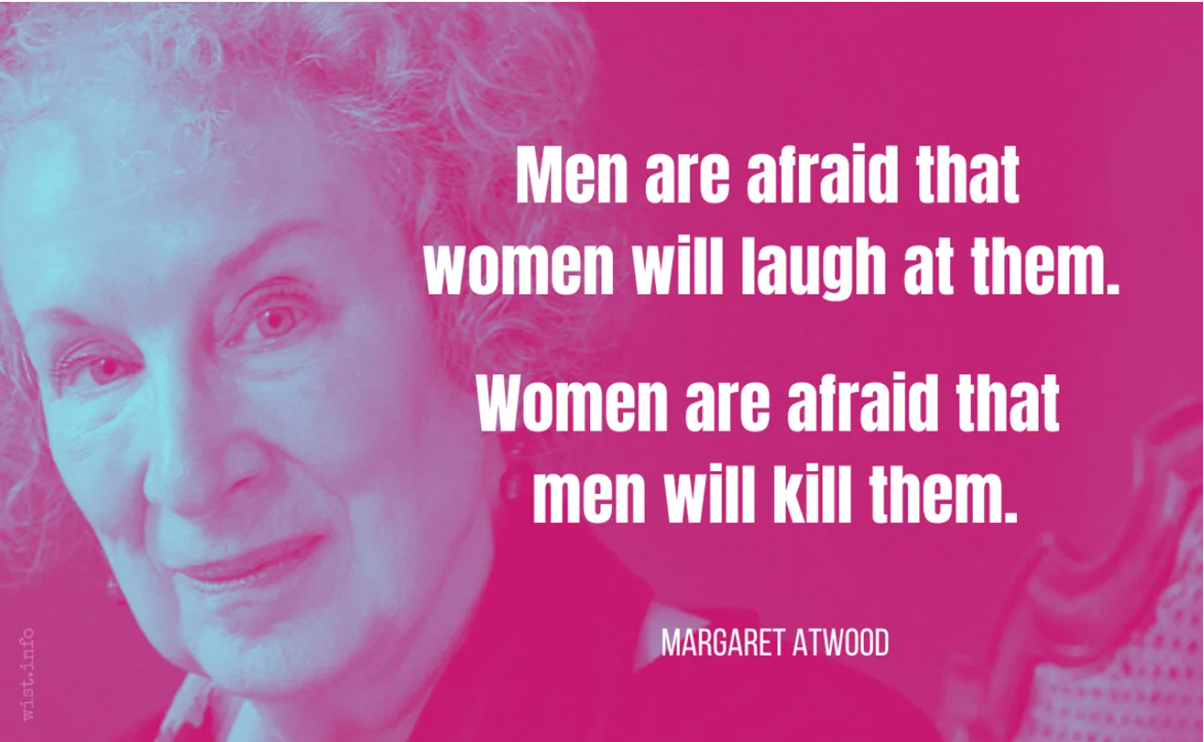
There’s a famous passage by Margaret Atwood that’s often paraphrased like this:
Men are afraid that women will laugh at them. Women are afraid that men will kill them.
In 2008, after Clayton Weatherston had murdered his ex-girlfriend, Sophie Elliot, in a frenzy of stabbing and mutilation, he claimed she had provoked him, calling him ‘useless in bed’, emasculating him, and comparing his penis to those of her former lovers. The public’s revulsion with Weatherston would ultimately see the provocation defence removed from the law – a complex issue we won’t talk about today.
But Weatherston ran the defence, although without success, because it appealed to an idea that’s never fully disappeared. A man’s dick is his identity, his potency, his worth. Mock his identity, his potency and his worth, and a woman can’t be entirely surprised if a man loses control. She didn’t make him violent exactly; but then again, she didn’t help herself, did she? The sexual belittlement of men is an age-old excuse for harming or killing women.
You get my point: talking about the serious side of teeny-dicks jokes risks seeming like an apologist for male violence. I want you to know that’s emphatically not what I’m about, although it’s an issue we’ll unpack further. With that in mind, let’s keep going.
There’s a cultural link between male sexuality and domination of others, and it’s kind of gross
These days, if you hear the word ravishing, it refers to a beautiful woman; a bride, perhaps. Of course, that’s not where the word came from. If like me you furtively read cheap smutty novels as a teenager, you’ve seen the word in a different context. In these books, the hero ravishes a woman who hasn’t yet quite consented to him because he’s a bit of a git – although the reader knows his chiselled abs will eventually bring her around. This usage is closer to the original meaning of ravish, which is to seize by force, to plunder or to rape.
Somehow, a word that meant violence towards women became a compliment. It’s weird. Even our more modern language around sex – nailing, banging or smashing someone – has undertones of force. Now, I’m not judging you if you use these words: there’s nothing wrong with being partial to a bang. But it’s interesting to think how terms like these describe sex as a thing done by a man (active) to a woman (passive). That’s great if it’s the sex you want to have, but it becomes a problem when it seems like the only ‘normal’ or ‘right’ way to have sex.
It’s no coincidence that weird language around male sexuality and domination is a very strong theme in one long chapter of history: colonisation. In stories told by colonisers, nature is thought of as a woman. Exotic lands are torrid and seduce men. The men conquer virgin territory, or even rape the land. Christopher Columbus, when he ‘discovered’ the Americas, it said to have had a vision in which he saw the curvature of the world as a breast, and the protruding land as a nipple. Ewww.
Of course, the male sexual domination metaphors that colonisers used weren’t just metaphors. Tina Ngata describes how the Doctrine of Discovery – rules made by Europeans to give themselves permission to take lands they’d ‘discovered’ – said it was OK to subjugate indigenous people, including by making them slaves and raping them. And Selina Tusitala Marsh, in her jawdropping poem Guys like Gauguin, describes how the artist made his home in Tahiti (colonised by the French), where he lived the life of a dirty old man leching onto very young Polynesia girls.
What to make of all that? Well, we can see a mindset that linked things together: (white) men should naturally be in charge of things, and their male sexuality is all about dominating, so of course men will think about controlling people and things in sexual terms. It’s like dicks were the identity, potency and worth of whole nations.
Is this thinking just a relic from the past? For most of us, it seems pretty retrograde – but at the same time, there’s a particularly shitty breed of man who’s trying to revive these kinds of ideas, and is having some success. When Andrew Tate got slapped down by Greta, he wasn’t just being a misogynist, but was trying to troll her with the emissions of his cars, as if environmental damage somehow makes him manly.
More on these shitty men soon.
Penis size doesn’t straightforwardly equal sexual satisfaction, but that doesn’t mean men are happy
It’s time to put an issue to bed, so to speak. There’s a lack of evidence showing a correlation between a man’s penis size and the satisfaction of his partners.
In 2022, a group of researchers from Belgium published a literature review that gathered up a bunch of research on the topic. In short, some women thought the size of a partner’s penis is important, but most didn’t. Men who have sex with men cared a bit more about their partners’ penis size. That said, the research covered by the literature review was so limited that the authors couldn’t really draw conclusions.
This should be good news, more or less. Men should be able to stop worrying. But they don’t.
A 2023 study across different countries showed that 42% to 55% of men felt unhappy with the size of their penises, depending on the group of men and their culture – even though most of these men had perfectly normal penises. And that unhappiness is having an impact. Another study from 2024 found that men worried about their penis size were more likely to have mental health challenges and less satisfying sex.
But the thing that makes me saddest, as a straight woman and feminist, is this. A slightly older study from 2016 found that worries about their penis size were interfering with men’s relationships – or making them reluctant to have relationships at all. In their culturally-encouraged focus on their dicks, some men are surely overlooking all the things about themselves that make a wonderful partner: values and smarts and loyalty and caring.
We have to be cautious, because studies in these areas often just look at straight men only, and are small-scale and few and far between; but for me, these results seem intuitively about right, and are enough to make me concerned. If they weren’t about right we wouldn’t make dick-shaming jokes, because these jokes simply wouldn’t have any power.
In a world awash with violent porn, we need to disentangle boys’ sense of identity from domination through sex
A couple of years ago, I wrote something called Let’s not talk about sex, baby, about the looming changes to relationship and sexuality education in schools. Researching that piece showed me our kids were crying out for more and better education. And it brought home to me a shocking reality: our children, especially our sons, are being taught by porn. And it’s not the kind of porn that was around when we were younger – girlie mags hidden under mattresses, or VHS tapes brought up sheepishly to the shop counter.
I’m going to repeat what I wrote in that earlier piece.
In 2018, the Office of Film and Literature Classification surveyed 2,000 young people aged 14 to 17. I’ll simply quote some of their findings, without editorialising. The hurt in these stats speaks for itself.
- 67% of teens in the age group had seen porn (75% of boys, and 58% of girls).
- 1 in 4 young people first saw porn before the age of 12, and 71% weren’t seeking it out when they first saw it.
- 1 in 10 young people became a regular viewer of porn by age 14.
- 69% of regular viewers had seen violence or aggression, and 72% had seen non-consensual activity. This included a focus on men’s pleasure and dominance of others, and women being demeaned or subjected to violence or aggression.
- 73% of young people who were regular viewers used porn as a learning tool.
- 1 in 5 recent viewers of porn had tried doing something they’d seen.
- 72% of recent viewers saw things in porn that made them feel uncomfortable.
One kid surveyed, a 17-year-old boy, captured exactly the ambivalence of a generation of children raised with porn (and a warning that this is confronting):
“Positive: It shows young people, who may not have received any decent sexual education, how the mechanics of sexual interaction happens. It also shows some people that their desires are not unnatural or immoral. Negative: It sets a benchmark that is way too high for many young people, in terms of their performance. Males who can’t ‘bang away’ for hours, and girls who won’t take an*l or accept c*m on their faces, feel that they will fail to satisfy their partners, and so encourages depression and social withdrawal.”
For the record, I don’t necessarily have a problem with porn – but that’s not really what this is about. This is the dominance of men, non-consensual violence and degradation of women, normalised; and it’s wrapped up with the unrealistic bodies for which porn is famed, including large penises.
The kind of porn our kids are watching brings us back to the same place: a man’s dick is his identity, his potency, his worth. And it’s teaching our boys how to be in the world.
Predatorial men are linking male sexuality and domination so they can recruit and harm boys
I’ve raised two beautiful, kind-hearted boys to young men. One of them, as an early teenager, once showed me a YouTube video he thought was cool. It was about the world Scrabble champion, and it started out gently: obscure plays, triple word scores and winning stats.
The first off-colour comment by the YouTuber surprised me a little, but I kind of let it slide. It was a reference to the Scrabble champion’s big dick.
The second comment was more overt, and borderline aggressive: an invitation by the YouTuber to **** his dick.
After that, the comments got more consistent and ever more disturbing: women the YouTuber had ****ed, including a fat woman he disparaged; women ‘flaunting’ their p*ssies. I felt queasy.
I didn’t want to turn it into the thing, so I asked my son carefully if he’d noticed the language being used about women. He hadn’t. He was watching innocently because he just liked Scrabble.
But I could see as clear as day what the YouTuber was trying to do, and it wasn’t just linking dick size and male sexuality to domination. It was worse. He’d figured out there’s a demographic of gentle boys out there who, in a world of Andrew Tates, probably feel anxious that their nerdiness, their quiet quirky hobbies, made them less masculine.
The YouTuber offered those kids a hint of redemption. A boy can still claw back a little of his ‘failed’ masculinity. He just needs to be prepared to punch down on women.
We have a duty of care to boys and young men, and we’re falling short
In the series Adolescence, there’s a short scene you could almost miss within the harrowing plotline. The police are visiting the school that Jamie and Katie, the girl Jamie murdered, attended. One police officer’s son also attends the school, and the kid has a word with his on-duty dad in an empty room. He says to his dad, ‘You’re not getting it’.
The son tells how Jamie was being taunted by a group of kids, including Katie. On Instagram, Jamie was being bullied with emojis representing a red pill and blue pill – something the son describes as ‘a call to action by the manosphere’. The son explains the 80/20 rule, that 80% of women are attracted to 20% of men (the implication being that men not considered attractive have a grievance against women). He says kids were calling Jamie an incel, saying he’d be a virgin forever. The scene is a slightly awkward exposition – almost as awkward as the character of the son, who’s geeky-boy struggle to fit in, even to be accepted by his own father, is palpable.
Adolescence struck me because it refused to straightforwardly blame any single factor for Jamie’s violence. It’s not that Jamie wasn’t culpable. It’s that everyone else who had the chance to intervene, or to help Jamie change course, was culpable too.
Our sons don’t spring out of the womb fully formed any more than our other children. This is something we accept in most areas of life, from our rules around driver licensing to alcohol to voting to the criminal justice system. We, the adults, create the context in which young people make their decisions, and we’re responsible for putting safeguards in place when life throws more at our kids than they’re developmentally ready to handle. We can’t send the signal that young men should react with aggression or violence to sexual belittlement – but what message do we send when we don’t react to it, don’t try to stop it, don’t give them strategies to face it, or even laugh it off?
I wrote about this at the time Adolescence screened, and a friend of mine – a feminist woman I have a lot of respect for – disagreed with me strongly. Jamie had a choice, she said, and he chose violence. I’d guess my friend was herself reacting to what seemed like the age-old excuse I started this piece with: sexual belittlement as a reason to harm or kill. Maybe she was sick of the way history’s danced around the egos of men and over the bodies of women.
My friend had a point. As I wrote this, I remembered the name of Jamie’s character, but I had to look up Katie.
We’ve got a bigger, everyday issue with domination behaviour – and with grown-ass men who can’t see they’re the problem
Last week I made a tactical error. I’ve recently switched from Substack to Ghost, a more ethical writing platform, but one that doesn’t get picked up as easily by the algorithm. Aware I needed more promotion, I posted a link on Facebook and hit the ‘boost’ button on a whim, to see what would happen. Regrets followed.
The link I’d boosted was to a piece about Te Tiriti – which contributed to what happened next. The algorithm promoted the piece to people certain to react, but because they hated it. These people, almost all of them old white men, piled on. They told me I’m incredibly stupid, I’m a hypocrite, and I’m disgusting and pathetic. The pile-on drew the attention of more men of the same shitty ilk. It’s not the first time this has happened to me, and it won’t be the last.
I’m talking about this stuff with an amount of caution, because misogyny isn’t just an old or white man’s game. The 2025 Gender Attitudes Survey by the National Council of Women shows a rise in anti-woman sentiment across the board, and in alarming views from young men aged 18-34, a third of whom believe gender equality has gone too far. And misogyny isn’t even confined just to men.
Even so, the demographic harassing me was pretty clearcut. As the old white men piled on, I was genuinely baffled. I made certain they knew they were abusing a woman, and made my feelings about that plain. One man replied that while he didn’t support abusing women in general, I’m a coward. Another said he didn’t believe I’m actually a woman. Another accused me of playing the victim, and another simply told me to **** off. All kept going and going and going at me, like it was a compulsion.
The pile-on wasn’t a sexual thing, but it was about domination – and it was domination seeking a specific climax, the satisfaction of hurting somebody.
I’ve never in my life come so close to using dick-related insults: never. When a man has no better side to appeal to, no reason or care or ethics, all the self-defence that’s left is to puncture his ego. I gritted my teeth as a blocked the harassers one by one.
Each of these men, once he was blocked, probably went back to his cognitive dissonance and favourite chair and a cup of tea, comfortable in his self-image as a good husband, a good dad and good role model. He’d simply wanted a woman to show him the respect of agreeing with him; and a man not respected will naturally feel provoked.
Doing better for boys and men means doing better for everyone
The problem I have with teeny-dick jokes is that they reiterate a man’s dick is his identity, his potency, his worth. That harks back to the link between male sexuality and domination – and that in turn implies that boys and men with small penises, or who don’t dominate, are lesser.
To me, this all feels like the opposite of the direction we should be heading. Men should feel permission to hold love and respect for themselves and others. While it’s fair to point out that men are responsible for getting their own shit together, it’s not in my interests as a feminist to hinder them.
And anyway, boys aren’t yet men.
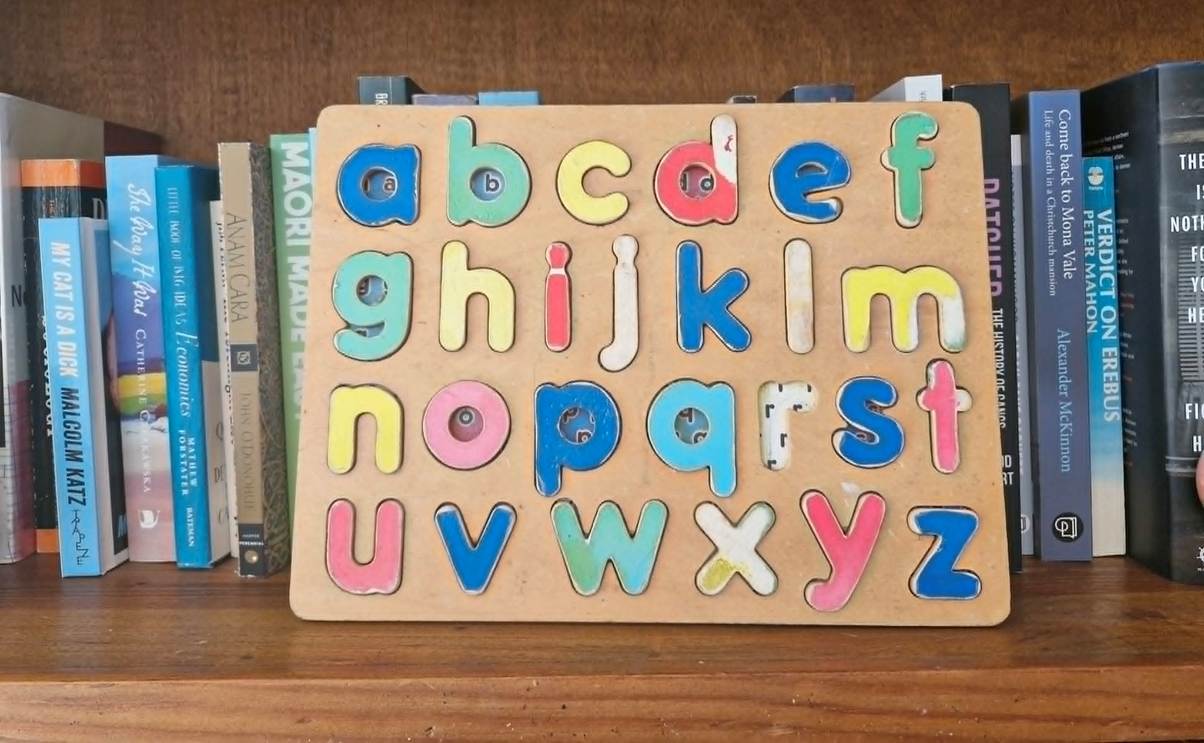
I wrote this at my table, beside the bookshelf where I prop all sorts of things, including mementoes of my sons’ childhoods. There are photos, of course, and joke presents. And there’s a wooden alphabet puzzle they both loved so much as preschoolers that they rubbed some of the colour off the letters. I glued the letters onto the base, all but the missing R, so the puzzle would stand upright, like a picture. They say having a kid feels like your heart walking around outside your body, and it’s true. But both my boys, now young men, still tell me they love me when we hang up a call. My heart is exposed but intact.
I don’t want my gentle, word-loving sons to feel lesser: not ever. It’s a fight I’d take to the streets, if that was where it needed to be fought; but really, there are simpler places to start, like choosing jokes that respect my boys’ bodies and their ways of doing masculinity. Maybe it’s unfair the battle against the Andrew Tates who want to claim our sons sits with us mothers, but hell. When it comes to misogyny, we women know how to fight.
My sons are gentle but I am not. And my feminism demands more of me, for my boys and for yours.